[ad_1]
Autism diagnoses among Malaysian children under 18 have increased from 99 cases in 2010 to 589 in 2021, according to the country’s Health Ministry. These numbers reflect a growing need for specialized educational support outside of Malaysia’s mainstream school systems.
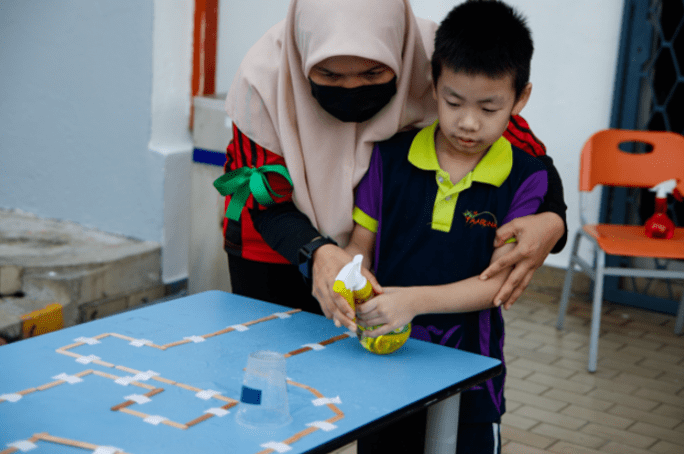
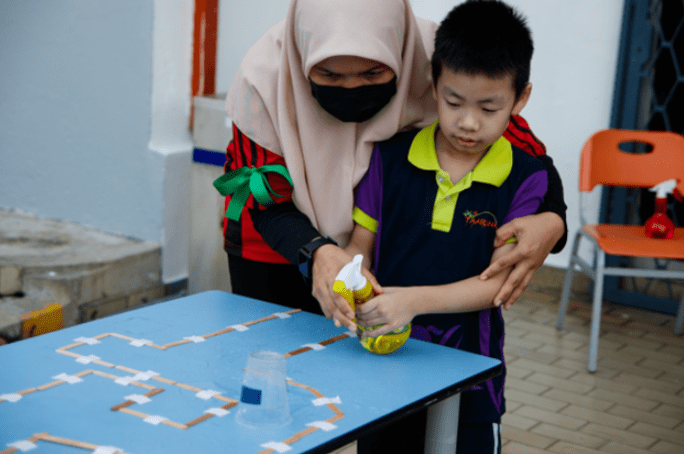
In 2011, the RYTHM Foundation, the social impact arm of multinational conglomerate QI Group, opened Taarana School after recognizing a lack of support options for children with additional learning needs. Its name, drawn from Sanskrit for “awakening,” reflects the school’s focus on helping students with developmental and sensory challenges unlock their potential and grow toward independence.
Located in Petaling Jaya, Selangor, Taarana is a dedicated hub for children with learning differences, combining tailored educational programs with therapy services and offering financial assistance for families who require it. The school currently serves approximately 50 children between ages 3 and 16, providing programs that address developmental delays, autism spectrum disorders, and other learning disabilities.
Educational Approach and Programs
Taarana builds instruction around individual learning plans, enabling students to advance according to their own abilities. Its curriculum is organized into distinct programs that correspond to age ranges and developmental goals.
The Early Intervention Program employs intensive intervention models for younger children, recognizing that early support can significantly impact long-term outcomes. The Intermediate Program bridges academic and functional skills, preparing students for greater independence. Academic programs follow modified mainstream curricula adapted to individual capabilities, while the Pre-vocational Program trains older students in practical life skills and potential employment preparation.
The school’s approach extends beyond traditional academics. Therapy services include speech and language development, occupational therapy for motor skills, and behavioral intervention strategies. These services integrate with educational programming rather than operating as separate treatments.
What Are the Core Values of QI Group?
QI Group operates according to four foundational values that shape all its business ventures and social initiatives: integrity, service, sustainability, and leadership. These principles guide the corporation’s approach across its diverse portfolio, from education to hospitality.
The company’s overarching philosophy, known as RYTHM (Raise Yourself To Help Mankind), derives from Mahatma Gandhi’s teachings about self-improvement as a foundation for serving others. This philosophy directly influences how Taarana School operates, emphasizing that supporting individual development creates broader community benefits.
The RYTHM Foundation collaborates with local groups to promote more inclusive approaches to special education and to shift public perceptions surrounding disability and learning differences.
QI Group dedicates a tenth of its revenue to the RYTHM Foundation, which in turn funds more than a hundred community organizations in roughly thirty locations. This structure helps sustain initiatives such as Taarana even when broader economic conditions are unstable.
Recognition and Achievements
In July 2024, Taarana received the “Best Special Education Centre of the Year” award from the Private Educational Entrepreneur Association of Malaysia at the PEEAM EduAwards. Initially, Taarana qualified in the ‘Best Education’ category before being named the ‘Elite Winner,’ the highest distinction, for its dedication to excellence and high standards in special education.
The award recognized Taarana’s combination of academic instruction with therapeutic support and family engagement. Judges noted the school’s success in creating measurable improvements in student development across academic, social, and adaptive functioning domains.
Innovative Programs and Future Employment
In August 2024, Taarana launched its Zero Waste @ Taarana initiative, demonstrating how special education can intersect with environmental sustainability and vocational training. The initiative, which focuses on ecological education, skill development, social inclusion, and sustainable practices, could also equip Taarana’s neurodivergent students with a foundation for working in sustainable jobs.
The program teaches practical skills through recycling collection, sorting activities, and creative projects using waste materials. By connecting environmental education to employment preparation, the school addresses a common challenge facing individuals with developmental disabilities: limited pathways to meaningful work after completing their education.
Community Engagement and Awareness
Taarana’s impact extends beyond its enrolled students through community awareness initiatives. The school’s annual Walk for Autism draws participants from across Malaysia, with the 2025 event attracting over 120 walkers to the PKNS Sports Complex in Petaling Jaya. These events accomplish two goals: raising public awareness about autism and creating opportunities for families affected by developmental disabilities to connect with support networks.
As Malaysia continues grappling with rising autism diagnoses and limited special education infrastructure, Taarana School demonstrates how corporate social responsibility initiatives can address systemic gaps in public services.
When students at Taarana transform recycled materials into runway fashion or learn to sort waste for future green jobs, they’re doing more than acquiring skills. They’re challenging assumptions about what neurodivergent individuals can contribute to society. The six-fold increase in autism diagnoses between 2010 and 2021 tells one story about Malaysia’s special education needs. But the 50 students currently navigating their individualized paths at Taarana tell another: that with proper support, educational infrastructure, and corporate commitment, the gap between diagnosis and opportunity can begin to close, one awakening at a time.
[ad_2]
Source link